
Agricultural Cooperative Development
Early-stage social enterprises can transition from dependency on stipends to sustainable agribusinesses when entrepreneurship training is paired with structured coaching and infrastructure support.
In 2015 we supported a Cooperative within the national Community Work Programme (CWP) in Lawley, Gauteng Province. The intervention combined SETA-accredited entrepreneurship training with intensive business coaching and food garden infrastructure installation. The project aimed to catalyse the cooperative’s transformation from a stipend-dependent work team into a viable micro-enterprise producing consistent agricultural outputs.
- Objectives: Increase cooperative productivity, strengthen organizational structure, and generate pathways toward market-driven sustainability.
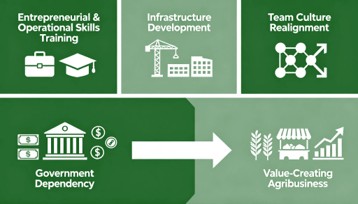
- Theory of Change: By equipping participants with entrepreneurial and operational skills, resolving infrastructure bottlenecks, and realigning team culture, the cooperative can shift from reliance on government stipends to value-creating agribusiness, sustaining jobs and livelihoods in Lawley.
Delivery and Reach:
- Accredited Training Modules delivered:
- Operations (Unit Standard 119668)
- Marketing (Unit Standard 119672)
- Finance (Unit Standard 119674)
- Business Coaching: Regular in-person sessions focusing on productivity, governance, and team culture.
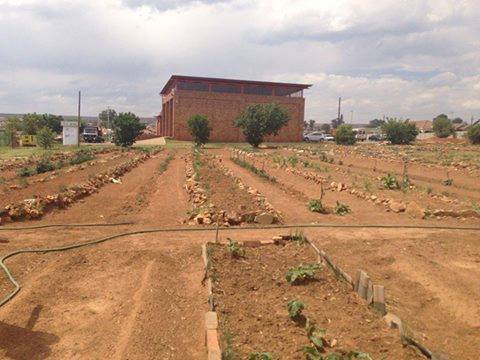
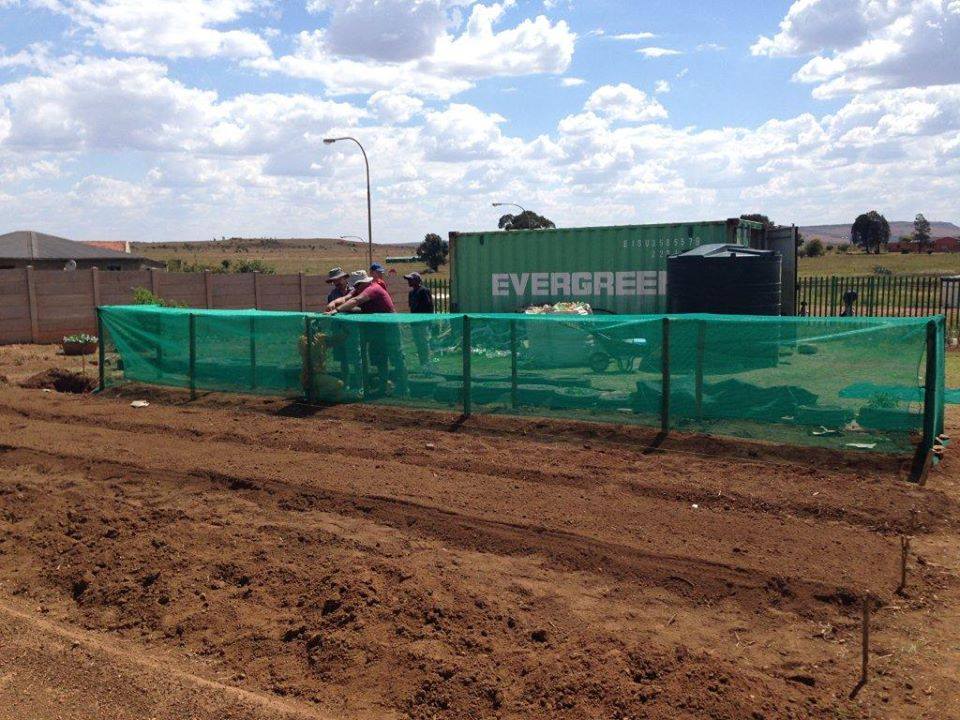
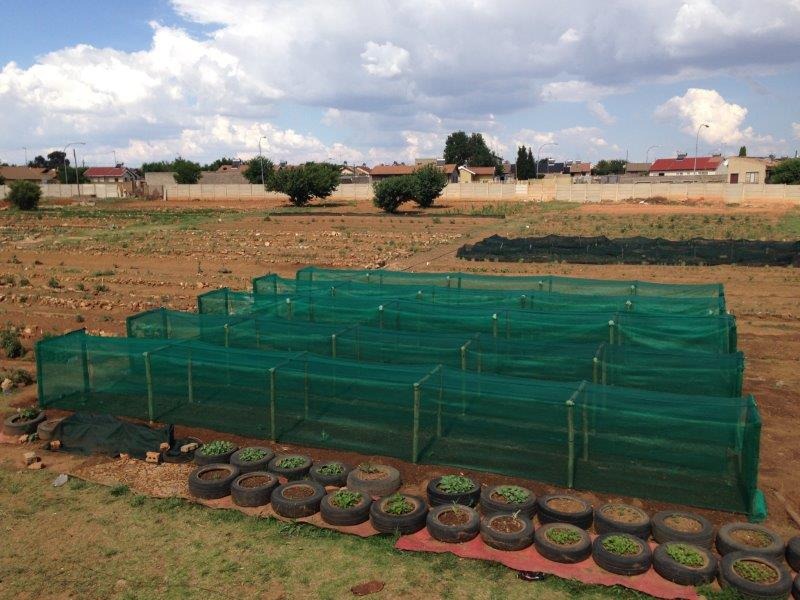
- Infrastructure Intervention: 5 low-cost tunnels with irrigation pilot installed on 60m x 60m plot adjacent to Lawley Fire Station.
Beneficiaries:
- Province: Gauteng, Region G and Lawley
- Sectors: Agriculture (small-scale agriculture).
- Target Group: CWP workers, cooperative members in low-income township/rural-urban fringe.
- Number of learners: 16
- Number of Dropouts: 5
- Number of Males: 7
- Number of Females: 4
Results and Impact:
Key achievements include:
- Accredited training: participants were trained in entrepreneurship skills including finance, operations and marketing.
- Financial Projections: scenario forecasts developed for garden outputs.
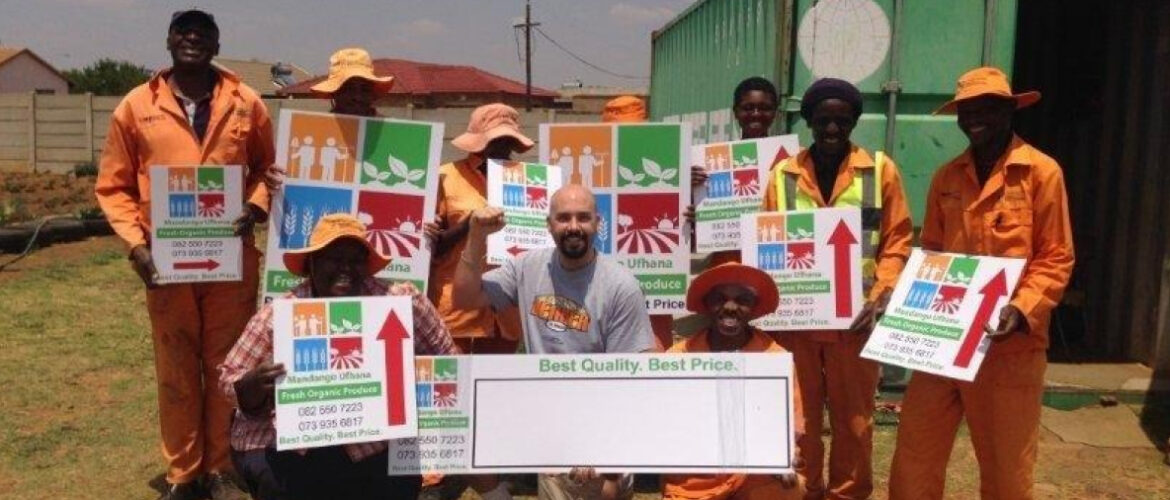
- Branding: developed a brand and provided signage (logo, banners and direction boards).
- Operational Improvements: timekeeping, productivity, and quality control practices.
- Infrastructure: installation of 5 tunnels with customized irrigation system.
Economic Outcomes:
- Ventures: the cooperative was an existing entity, we improved productivity, planning, branding and infrastructure to increase survival prospects.
- Jobs and income: reduced dependency on stipends by introducing income opportunities through fresh produce sales.
- Access to Finance: improved planning and compliance for a fundraising target for additional tunnels and irrigation.
Risks, Mitigations, and Lessons
- Low Team Commitment → Mitigation: Team-building activities; residual risk persists.
- Weak Infrastructure (no electricity/irrigation) → Mitigation: custom tunnels; needs scale-up investment.
- Over-reliance on CWP stipends → Mitigation: Cooperative restructuring; fresh produce sales introduced.
- Restricted Market Access → Partial mitigation via branding and signage; sales channels still undeveloped.
SDG Alignment
- SDG 1 (No Poverty): CWP stipends as safety net; transition to enterprise for sustainable livelihoods.
- SDG 8 (Decent Work & Economic Growth): Focus on productivity, coaching, and small enterprise survival.
- SDG 12 (Responsible Consumption & Production): Local small-scale agriculture promoted.
“Through our interventions we have placed a large emphasis on improving the current situation through team building activities.”
The Cooperative began as a group subsisting on CWP stipends, with little incentive to generate market-driven income. Our interventions reshaped their trajectory. By reallocating part of the Lawley Fire Station plot, installing five low-cost tunnels, and developing customized irrigation, Ubuntu catalysed a mindset shift. Members gained skills in finance, operations and marketing, while branding and signage established a visible presence. Although no new jobs were created, the cooperative now demonstrates improved productivity, cohesion, and readiness for fundraising.
External Context:
- Stats SA Quarterly Labour Force Survey (QLFS): Contextualize township/rural unemployment.
https://www.statssa.gov.za/?page_id=7374 - GEM South Africa Report: Entrepreneurial ecosystem strengths/constraints among low-income entrepreneurs.
https://www.gemconsortium.org - National Treasury SME Finance Report: Funding barriers for smallholders and coops.
https://www.treasury.gov.za - SEDA Annual Review: Support landscape for township agriculture coops.
https://seda.org.za - ILO “Decent Work in the Rural Economy” (SA focus): How stipends/short-term work intersect with enterprise creation.
https://www.ilo.org