What is Strategic analysis
- December 8, 2025
- Posted by: Ubuntu Business Team
- Category: Strategic Planning

Strategic Analysis for Small Business: Seeing Your Environment Clearly
Problem
Many founders in South Africa make decisions based on gut feel or a few conversations. That’s often necessary at the start, but as the business grows, this can lead to nasty surprises: new competitors, regulatory changes, or shifts in customer behaviour that you didn’t anticipate.
Without structured strategic analysis, your strategic planning rests on guesswork.
Approach
The research here leans on Third Sector Foresight, Dobney, and MindTools-style thinking.
Strategic analysis is defined as:
- Looking at what is happening outside your organisation now and in the future.
- Asking:
- How might these changes affect us?
- How should we respond?
It’s “strategic” because it is:
- High-level.
- Long-term.
- Concerned with the whole organisation.
It’s “analysis” because it breaks a complex environment into manageable chunks.
Key elements and tools:
- Understanding markets and customers:
- Target markets.
- Current customers.
- Potential customers and segments.
- Relationship analysis.
- Using market intelligence: data from market research, even if informal.
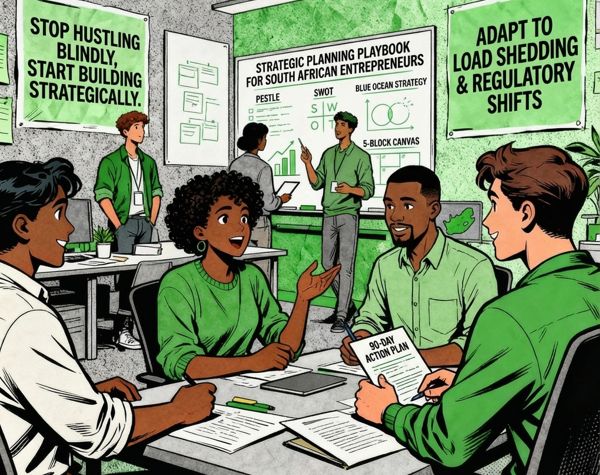
- PESTLE analysis (Dobney): Political, Economic, Social, Technological, Legal, Environmental influences.
- SWOT analysis (Mind Tools): Strengths, Weaknesses, Opportunities, Threats.
The research is conceptual and tool-based: it describes what good analysis should look like and why tools like PESTLE and SWOT can improve decision-making.
Results
Strategic analysis can improve effectiveness by:
- Helping you anticipate what might happen.
- Evaluating how likely it is to happen.
- Preparing responses before you’re forced into them.
SWOT in particular can help you:
- Spot opportunities you’re positioned to exploit.
- Recognise weaknesses that could turn into threats if ignored.
Lessons for founders
What the research shows
- Good strategy requires understanding your external environment and your internal capabilities.
- Structured tools like PESTLE and SWOT help you see patterns and prioritise issues.
- Strategic analysis is ongoing; environments change.
What this suggests you might try in your startup
- Run a simple PESTLE on your market.
For a South African fintech, that might include:- Political/Legal: FSCA regulations, POPIA compliance.
- Economic: interest rates, unemployment, load shedding impacts.
- Social: trust in digital financial services, demographics.
- Technological: smartphone penetration, data costs.
- Environmental: not always primary, but relevant for sectors like agriculture or energy.
- Do a honest SWOT as a team.
- Strengths: e.g. strong local network, deep community trust.
- Weaknesses: limited capital, key-person risk.
- Opportunities: new grant, partnership, or underserved segment.
- Threats: a big corporate entering your niche.
- Turn analysis into decisions.
Don’t stop at the matrix. Decide:- Which opportunity will we act on this quarter?
- Which weakness must we mitigate first?
- Use lightweight data.
You may not have budget for big research. Use:- Customer interviews.
- Public reports.
- Conversations with other founders.
- Simple surveys or WhatsApp polls.
- Schedule analysis time.
Once a quarter, step back from operations to re-check your assumptions. In volatile environments, this can be the difference between pivoting early and reacting too late.